A pair of Critically Endangered White-backed Vultures fitted with GPS transmitters in northern Morocco have dispersed, with one bird successfully crossing the Strait of Gibraltar into Spain.
The vultures were tagged at the Jbel Moussa Vulture Rehabilitation Centre in collaboration with the Vulture Conservation Foundation (VCF), marking a significant development in efforts to better understand the movements of this rapidly declining African scavenger.
Although Rüppell’s Vultures are now increasingly regular in southern Europe, White-backed Vulture remains an exceptional visitor to the Western Palearctic. Records in Morocco have increased gradually over the past decade, but only a handful of individuals have ever been tracked and even fewer have reached Spain.
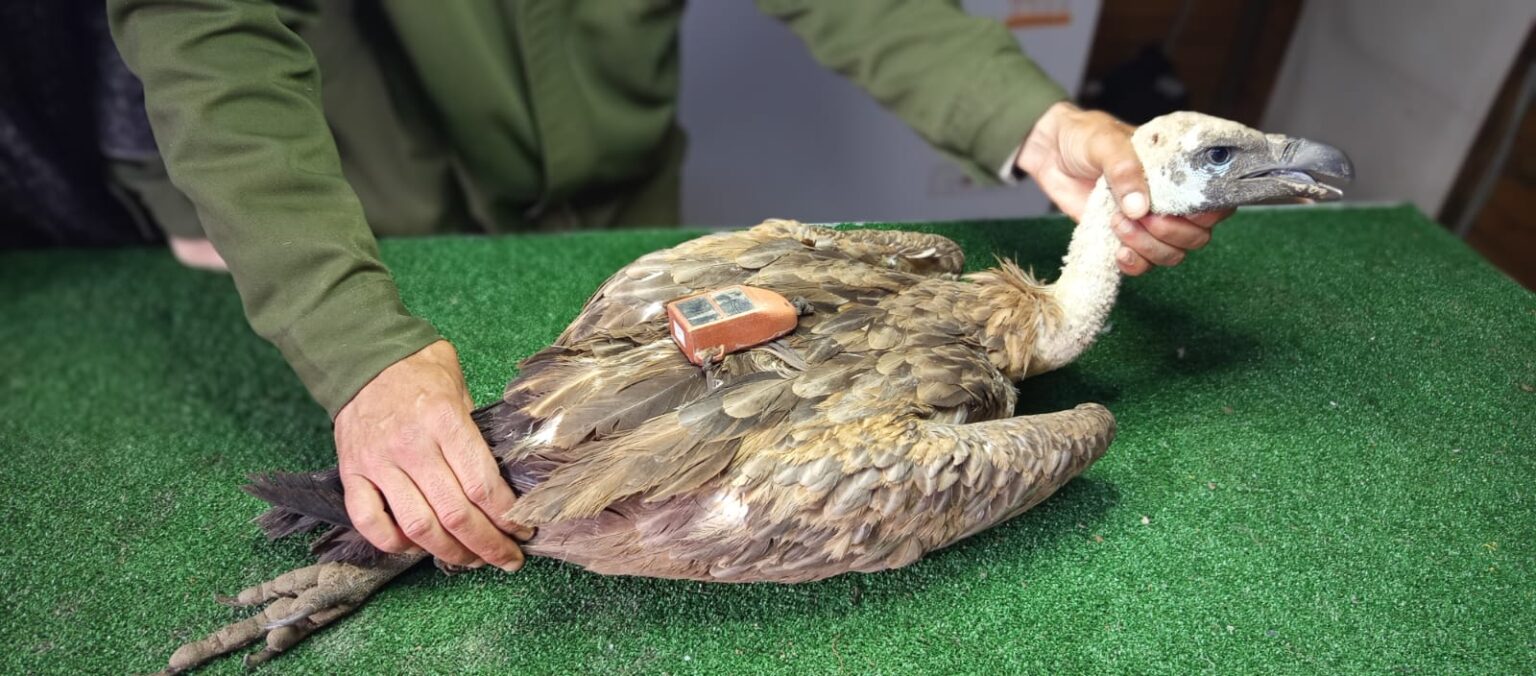
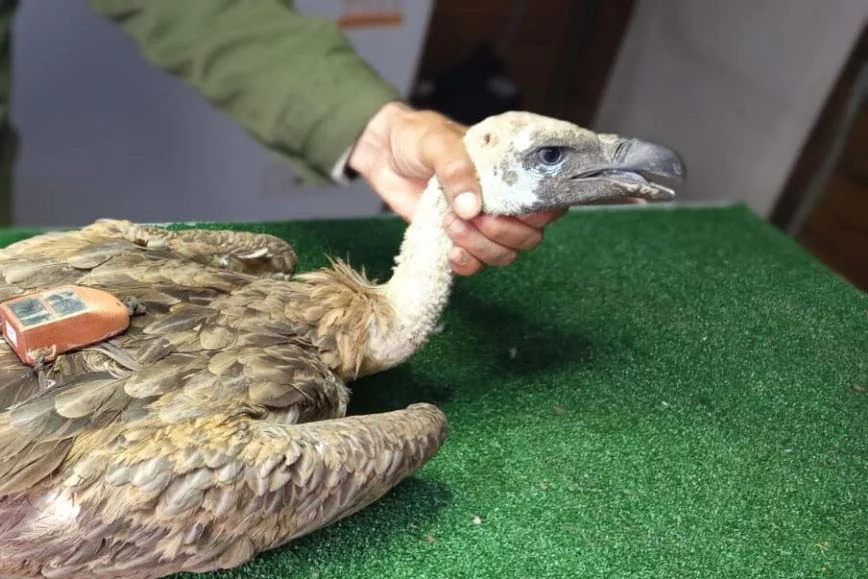
One of the White-backed Vultures fitted with VCF GPS transmitters (Jbel Moussa Vulture Rehabilitation Centre).
White-backed Vultures reach Spain
The latest birds were fitted with GPS transmitters shortly before release, allowing conservationists to monitor their movements in real time. One bird has already reached mainland Spain, although researchers noted concern after it flew close to a windfarm shortly after crossing. The second bird’s tag didn’t work, so it is not known where it currently is.
The tagged birds are believed to be following the same northward movements undertaken by wandering Griffon Vulture and Rüppell’s Vultures between Africa and Europe. One of the newly tagged individuals is also notable as the first fourth-calendar-year White-backed Vulture recorded in the region.
Interestingly, some 25 Ruppell’s Vultures have been recorded at Jbel Moussa since 1 May, which is more than double last year’s total of 12 for the same period
Globally, White-backed Vulture is undergoing severe declines driven primarily by poisoning, alongside habitat loss, collisions with infrastructure and persecution. Conservationists hope the tracking project will provide valuable data on dispersal routes and emerging threats as the species, like Ruppell’s, increasingly reaches Europe.