Why are these countries called the ‘Big Four’ and where is Spain? Well, we have the answer.

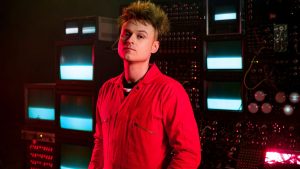
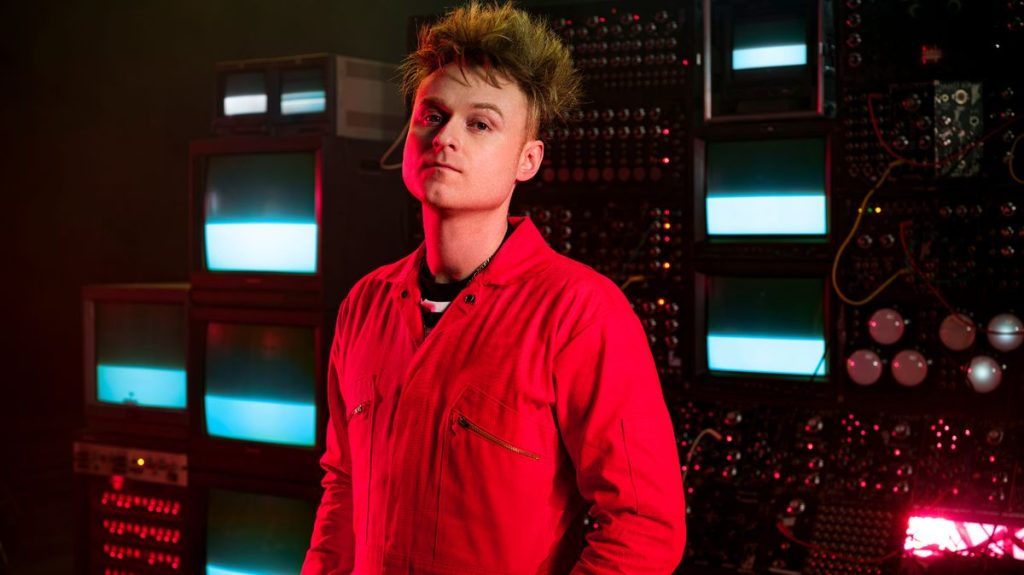
Look Mum No Computer is this year’s UK entry for the Eurovision Song Contest(Image: BBC)
We are just hours away from the Eurovision Song Contest 2026, with 25 nations hoping to win the competition, bring home the trophy and next year’s hosting duties for their country. For seasoned Eurovision fans, the format will be familiar, but for those newly initiated into the gloriously chaotic world of Eurovision — welcome aboard, because there is plenty to get your head around.
You might be wondering who exactly “The Big Four” are, and why they automatically secure a place in the grand final of Europe’s biggest music contest without having to compete in the semi-finals.
Let us begin with the fundamentals — the Eurovision Allocation Draw. For the latest TV and showbiz gossip sign up to our newsletter
What is the Eurovision Allocation Draw?
Given the sheer number of nations taking part, the European Broadcasting Union divides the competing countries into two separate semi-finals through an Allocation Draw. This year’s first semi-final featured 15 countries on Tuesday, May 12, while a further 15 went head-to-head in the second semi-final on Thursday, May 14.
The official Eurovision Song Contest website outlines the selection process: “The countries that will take part in the semi-finals are divided into pots based on their historic voting patterns and then chosen at random to compete in either the first or second semi-final.”
This system ensures countries with a track record of vote-sharing are unlikely to appear in the same semi-final, thus increasing the drama during the live shows.
The allocation of nations into pots receives approval from both the contest’s executive supervisor representing the EBU and the Reference Group chairman, the body responsible for overseeing the competition.
Who are “The Big Four”?
Those tuning in tonight may wonder why France, Germany, Italy and the United Kingdom receive automatic qualification to the final. Known as the “Big Four”, these countries, alongside the Host Country (the previous year’s winner), proceed directly to the Grand Final.
Normally they are referred to as the “Big Five,” as it would usually also include Spain. However, the country decided to withdraw from this year’s competition due to Israel’s participation in Eurovision. In September, it was announced that their state broadcaster RTVE’s board had voted to withdraw from Eurovision if Israel were to take part.
At the time, the RTVE president José Pablo López, said: “As joint organisers of the Eurovision song contest, we share a collective responsibility. While Israel has regularly participated in the competition, the current events and the genocide currently taking place make it impossible for us to look the other way.”
The Eurovision competition’s official website explains the Big Five concept, stating: “The Big Five are the participating broadcasters from France, Germany, Italy, Spain and the United Kingdom – the group of countries who, via their broadcasters, make the biggest financial contribution towards the organisation of the contest.”
This year, Austria gains automatic qualification for the grand final as host nation in Vienna , following their representative JJ’s triumph in last year’s competition.
Therefore, those automatically qualifying for this year’s contest currently include Germany’s Sarah Engels, France’s Monroe, Italy’s Sal Da Vinci, Austria’s Cosmo, and the United Kingdom’s Look Mum No Computer.
Look Mum No Computer, whose real name is Sam Battle, was confirmed in February as the artist chosen to fly the flag for the UK at the 70th edition of the contest.
The artist will take to the stage to perform their track Eins, Zwei, Drei, which is said to centre on ‘escaping the boredom of the nine to five, into a world of dreams and endless possibilities’.
You can watch the grand final of the Eurovision Song Contest from Saturday, May 16 at 8pm on BBC One and BBC iPlayer.