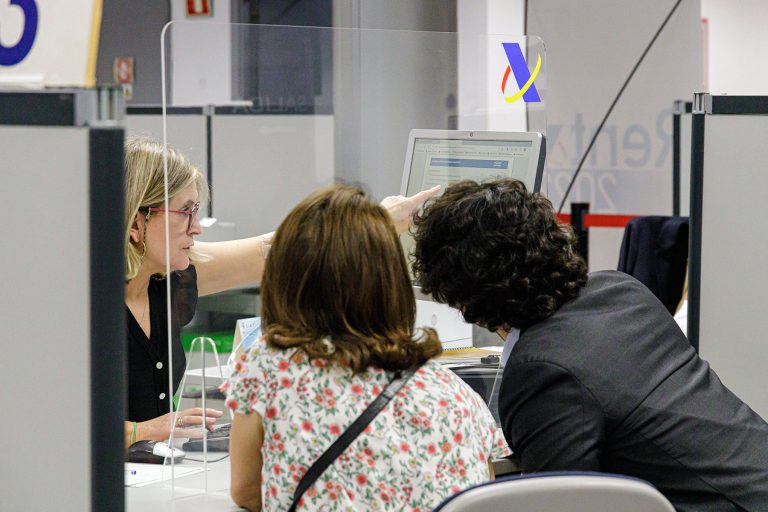
Whether you are moving on a remote worker visa, retiring, or taking a local job, here is how to navigate the core rules, explore special options like the Beckham Law, and protect your financial setup early.
Key takeaways
- 183-day rule: Spending more than 183 days in Spain within a single calendar year triggers tax residency, making careful travel tracking essential.
- Center of economic interests: Spain can classify you as a tax resident even under 184 days if your main professional activity, business control, or primary income source sits locally.
- Family presumption: Having a spouse and dependent children habitually living in Spain creates a legal presumption of tax residency that you must disprove.
- Full calendar-year rule: Domestic rules treat you as a resident or non-resident for the entire tax year, meaning mid-year relocations do not automatically create a clean part-year split.
- Worldwide income tax: Tax residents fall under IRPF, making foreign salary, pensions, savings, and global investment returns subject to Spanish taxation and reporting.
- Beckham Law: Qualifying new arrivals can access a special tax regime (Régimen Especial de Trabajadores Desplazados) that caps tax rates and limits scope on foreign-source income.
What makes you a tax resident in Spain?

Spain can treat you as a resident through more than one route. One thing worth knowing is that the 183 day rule is only the starting point, not the full answer.
How the 183-day rule works
According to AEAT’s residency guidance, you are generally resident if you stay in Spain for more than 183 days during the calendar year. Those days do not need to be consecutive, so several shorter stays can still add up.
Spain is not using a rolling 12-month test here. It is looking at the tax year from January through December, and sporadic absences may still count unless you can prove tax residence elsewhere.
- Count the whole calendar year, not the last 12 months.
- Keep arrival and departure records, not just rough estimates.
- Verify how sporadic absences are treated in your case.
When economic interests and family ties can trigger residency
Spain can also look at whether your main base of activity or economic interests is in the country, including where you run a business, manage a company, perform your main work, or earn the core share of your income.
AEAT also applies a family presumption if your spouse, unless legally separated, and dependent minor children habitually live in Spain, so even if you’re in Spain for less than 184 days, you may still be treated as a resident.
Checklist of common indicators:
- Your main job or client work is carried out from Spain
- You manage a Spanish business or direct its day-to-day activity
- Most of your income is tied to Spain
- Your spouse and dependent children habitually live in Spain
- Your records show Spain as the real centre of daily life
Send money with Wise
Sending money to or from Spain? Cross-border payments don’t have to be complicated. With Wise, you can hold over 40 currencies in one account and send money to over 140 countries transparently at the mid-market exchange rate. Be smart. Get Wise.
Tax residency is not the same as legal residency

Legal residency, immigration status, visa status, and tax residency are related, but they are not the same thing. A residence permit lets you live in Spain under immigration rules, whereas tax residency decides which Spanish tax system applies to you.
For example, you might hold a visa but spend too little time in Spain to be a tax resident. The reverse can also happen, and someone without long-term immigration status can still become tax resident if they meet the tax tests through presence, family ties, or economic interests.
Why the calendar year matters in Spain
Key point: Spain generally treats you as resident or non-resident for the entire calendar year under domestic rules. AEAT says a change of residence does not interrupt the tax period.
Why it matters: If you move mid-year and trip a residency test, do not assume Spain will only look at the final months. As PwC Spain’s residence summary puts it, “the concept of part-year resident does not exist” under Spanish law. Treaty and dual-residency cases can soften the result, but they need case-specific review.
What changes once you become a Spanish tax resident?

Once you become resident, the big shift is usually from Spanish-source taxation to worldwide taxation. Residents generally fall under IRPF, which is Spain’s resident personal income tax system. On the otherhand, Non-residents generally fall under IRNR, the non-resident income tax system, and are usually taxed only on Spanish-source income.
That difference can affect salary, pensions, rental income, dividends, interest, capital gains, and other savings income. Rates, deductions, and allowances can differ by status, and autonomous communities can affect the final bill. So while Madrid, Catalonia, and Andalusia are often used as examples, they are not national defaults. For example, the Basque Country and Navarra follow separate systems, so national examples may not apply there in the same way.
| Status | Taxed on | Common form or regime | Key watch-out |
| Ordinary resident | Generally worldwide income | IRPF, often through Modelo 100 | Foreign income, savings income, wealth tax exposure, and foreign-asset reporting may all need review |
| Non-resident | Generally Spanish-source income only | IRNR, often through Modelo 210 | Fewer allowances usually apply, and Spanish property or local income can still create filing duties |
| Beckham-regime taxpayer | Broadly taxed under special inpatriate rules | Special regime, commonly linked to Forms 149 and 151 | It is not automatic, and the scope, timing, and treaty effects must be checked carefully |
One thing worth knowing is that worldwide income tax in Spain does not mean every foreign item is taxed in exactly the same way. Treaties, credits, exemptions, and special regimes can change the end result, but they do not remove the need to check your filing position first.
Can the Beckham Law apply to you?

The Beckham Law is the common name for Spain’s special inpatriate regime. It is designed for certain people who move to Spain and become tax resident here, but who are also allowed to pay under special rules that differ from ordinary resident treatment. That is why it is often attractive to employees relocating to Spain and some internationally mobile professionals.
AEAT’s current guidance shows the regime now covers a wider group than many expats expect, including some teleworkers and other qualifying newcomers. But this is exactly where readers should slow down. Remote workers and digital nomads should not assume they qualify automatically just because they live in Spain or hold a Digital Nomad Visa in Spain.
Check these points before you rely on it:
- You were not resident in Spain during the required prior period under current rules
- Your move fits a qualifying work, telework, entrepreneurial, or professional route
- You apply within the current deadline
- You understand the difference between ordinary residency and special-regime treatment
- You verify the latest AEAT rules, forms, and filing routes before acting
If this regime might fit your move, read Expatica’s deeper guide to The Beckham Law in Spain before you decide.
How to check your status and stay compliant

Moving from the statutory tests to actual compliance requires setting up your records early. Understanding your filing obligations, gathering day-to-day supporting evidence, and knowing when to hand your file to a qualified Spanish tax accountant will keep your transition smooth.
Which forms and deadlines matter?
- Modelo 100: The main resident income tax return under IRPF for many Spanish tax residents.
- Modelo 210: Commonly relevant in some non-resident situations under IRNR.
- Form 149 and Form 151: The filings readers often need to verify if the Beckham regime applies.
- Modelo 720 and wealth tax filings: Relevant only in some resident cases, depending on current rules, asset type, and thresholds.
For filing mechanics, deadlines, and common documents, start with Expatica’s guide on How to file income tax in Spain in 2026 and make sure your ID numbers in Spain are in place where a NIE or other tax ID is required. Always confirm current campaign dates through the AEAT filing portal before you file. If you need to move money into Spain to pay tax or receive income from abroad, a Wise account can hold 40 + currencies and help you convert, send, and receive money with more transparent pricing than many major local banks.
What records help prove your status?
If Spain ever questions your position, consistent paperwork matters more than memory. Keep documents that show where you were, where you lived, and where your real work and family ties sat during the year.
Useful records to keep include:
- Travel records, tickets, passport stamps, and entry or exit logs
- Leases, utility bills, and padrón or address evidence
- Employer letters, contracts, payroll records, or school records
- A tax residency certificate from another country where relevant
Compliance checklist
- Confirm your day count against the calendar year, not a rolling 12-month period
- Check whether family ties or economic interests point to Spain anyway
- Review whether a treaty changes relief, not just residency language
- Verify the latest AEAT guidance before relying on any Modelo 720 summary
- Get qualified advice if you have dual residence, trusts, company structures, or U.S. filing overlap
Common mistakes expats make with Spanish tax residency

Expats often run into costly surprises by assuming a visa clears them of local tax obligations. While your visa grants legal permission to live in Spain, the Agencia Tributaria evaluates your tax status independently based on physical presence and financial ties. Likewise, double taxation treaties rarely eliminate Spanish filing requirements altogether; instead, they serve to prevent you from being taxed twice on the same income.
Take a realistic example. A remote worker moves to Valencia in September, keeps being paid abroad, and counts only the days since arrival. If family, work pattern, or calendar-year treatment point the other way, that quick self-check can miss the real issue.
Common mistakes include:
- Assuming a visa or legal residence permit decides tax status
- Counting a rolling 12-month period instead of the calendar year
- Ignoring family ties or the center of economic interests test
- Assuming a tax treaty removes the need to file in Spain
- Overlooking regional differences, wealth tax exposure, or foreign-asset reporting
Managing money across borders while living in Spain

Tax residency questions often sit beside everyday money problems. You may be paid in another currency, need to convert savings into EUR, fund Spanish rent and bills, or pay AEAT from an overseas account. That is why it helps to think about tax admin and cash flow together, not as separate tasks.
Major local banks such as Santander, BBVA, and CaixaBank may suit your day-to-day Spanish banking needs, especially for local direct debits and branch access. But if you still earn, save, or spend internationally, compare the exchange spread, transfer fee, and speed of moving money into EUR before assuming your local setup is enough.
A Wise account can be practical here because it can hold 40 + currencies, let you convert, send, and receive money, and let you use the Wise card in 150 + countries. For many expats, that makes it easier to bridge Spanish expenses and foreign income without juggling several accounts at once.
Quick checklist for cross-border money management:
- Know which bills must be paid in EUR and when
- Compare exchange costs before your first tax payment
- Keep records of transfers linked to salary, pension, or savings
- If your case is complex, use Expatica’s Accountants and Tax Preparation directory for case-specific help
FAQ
Frequently asked questions about tax residency in Spain
Yes, in many cases it is enough, because more than 183 days in a calendar year is a main residency trigger. But it is not the only test, and Spain can also look at economic interests and family ties.
Yes, that can happen because tax residency and immigration status are not identical. For example, someone with limited permit status can still become a tax resident if their presence and ties point to Spain.
Generally, yes, Spanish tax residents are taxed on worldwide income under IRPF. But treaties, relief mechanisms, and special regimes can change the final result, so not all foreign income is taxed in exactly the same way.
Maybe, but only in some cases. Foreign-asset reporting can apply to some Spanish tax residents depending on the asset type and current thresholds, so verify the latest AEAT rules before relying on any summary.
Sometimes, but not automatically. Some remote workers may be able to explore the regime under current rules, but eligibility depends on work structure, timing, and facts, so you should verify the latest requirements before assuming it applies.