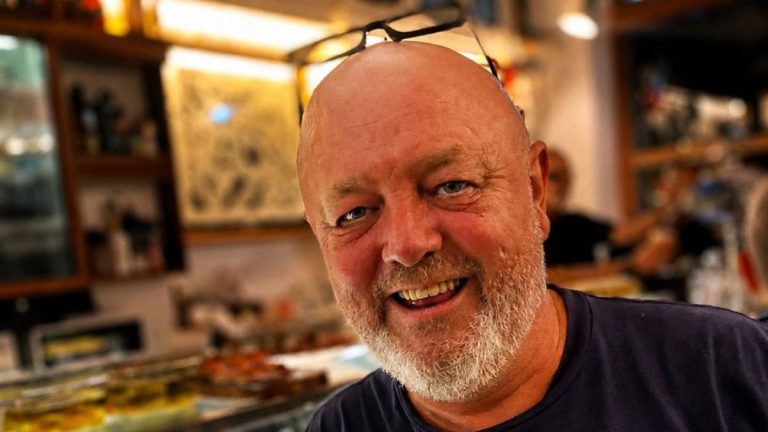
Eight days after my name was placed on Spain’s kidney transplant waiting list, my phone rang. A kidney had become available. Could I come to Doctor Peset University Hospital in Valencia immediately?
I had imagined months or years of waiting. Suddenly there was no time to think. Somewhere, a stranger had died and, amid another family’s grief, I had been offered the possibility of continuing to live.
I didn’t think I’d ever need to call upon this service. In 2019, I left London and moved to Valencia to work as a freelance writer. I spoke schoolboy Spanish and had always loved my visits to Spain. And I found the Spanish warm, friendly and sunny by disposition.
Shorts
How to be more grateful for daily life in five easy steps
Gratitude
The world feels like a difficult place at the moment, and it can feel very hard sometimes to find things to be thankful for; when we are overwhelmed, we have less capacity to notice and reflect on the good things. Yet, ironically, proactively cultivating gratitude is one of the things that can actually help us feel less stressed.
NHS GP dR RADHA
The science
Research has shown that feeling or expressing thanks can actually alter our brain.
The balance of neurotransmitters change; more serotonin and dopamine (feel good chemicals) are produced.
This can be long lasting if we make gratitude a regular habit.
We also get a decrease in our cortisol (stress hormone) levels which helps lower anxiety.
Being grateful can strengthen the nerve pathways which triggers positive emotion.
How can we build gratitude?
Caption: Two adult brothers enjoy a warm embrace in a sunny park. They stand beside a decorative fence surrounded by lush greenery, showcasing a strong bond and happiness in the moment. Photographer: Beatriz Herrera Provider: Getty Images Source: iStockphoto Copyright: [email protected]
Change your words
Instead of seeing something as a problem, try to see the opportunities within it.
Journal
Our brains are very receptive and what we read or write can alter our emotional system.
Caucasian mid adult patient writing a diary while recovering in the hospital ward – stock photo. (Photo: Getty)
‘One question is how to achieve such a longevity hack when most of us have relationships that unsettle us,’ says Dr Amir Levine (Photo: Oliver Rossi/Getty)
Express it
This will not only make you feel good, but you will also get a positive response from others.
How can we build gratitude?
Notice more
Throughout your day, try to notice all the things that are going well; has someone opened a door for you, or smiled?
Exercise with people you love (Photographer: Morsa Images/Getty/Digital Vision/Abel Mitj? Varela)Caption: Group of Happy Asian senior women friends shopping and having lunch at restaurant on summer holiday vacation. Healthy elderly woman enjoy outdoor lifestyle meeting and eating food together. Photographer: CandyRetriever Provider: Getty Images Source: iStockphoto
The basics
By being thankful for the small things every day, we are far more likely to be and stay healthy so that we can enjoy them.
What to do
Gratitude can lead to feelings of optimism, lower our blood pressure, and improve sleep quality.
Write down what potential good aspects there are to the things you don’t feel like doing, or even what could be worse about it.
Spend a few minutes writing down three things that you are looking forward to that day, or the good things that have happened to you that day.
Say thank you to yourself for the things you have achieved, or managed to get through and changed that day.
Sales of battery electric vehicles hit a record high last year.
Leon Poultney, a writer who specialises in cars, gives his EV recommendations, and the ones that should be avoided.
Renault 5 E-Tech
Starts at £22,995 for the smaller battery
Available with either a 40kWh battery or a larger 52kWh pack, that offers almost 255 miles, the latest, retro-inspired Renault 5 is both a joy to behold and a hoot to drive.
The interior has been lavished with a level of detail that’s typically reserved for more expensive cars.
4 min read
Mercedes-Benz CLA
A champion of EV efficiency
It offers a remarkable 491 mile range on a single charge from the 85kWh battery.
It is a technological masterclass inside with the ability to option screens that span the entire width of the dashboard, including an optional display for the front passenger.
Priced from £37,400
2 min read
Porsche Macan GTS
It’s a lot of money to part with, but this is arguably all the car you will ever need.
The £89,000 Macan is a premium SUV that somehow manages to blend Porsche’s reputation for dynamics and sporty driving with everyday practicality.
The 95kWh batteries can go from 10 to 80 per cent in as little as 21 minutes from the fastest public charging outlets.
Kia EV 9
With the business class-style six seat configuration costing a staggering £76,995, it is by far the most expensive Kia ever made, but it backs up its financial demands with a suite of genuinely useful and impressive onboard technology.
MG IM6
It’s fast, goes a long way between stops and charges relatively quickly but the interior is bland, the onboard technology is infuriating and the experience is devoid of emotion.
BYD Dolphin Surf
All of its gadgetry can’t disguise the fact that performance is weak, even for a typically zippy EV, the ride is fussy at slower speeds and it’s not in the least bit enjoyable to drive on a country road.
While good value (prices start at £17,935) for the 200-mile max range, there are more interesting options from Hyundai, Citroen and Renault for similar money.
Leapmotor T03
It attempts to wow with tech, much of which hinders, rather than helps.
There’s no tangible benefit over mounting your phone to the dash.
Simply an average driving experience, adequate range and slow charging speeds.
2 min read
The kitchen gadgets and products a food editor swears by, all under £25
The kitchen gadgets under £25
Caption: best kitchen gadgets
Victorinox paring knife
It’s comfortable to hold, with a point sharp enough for scoring pastry.
ProCook cast iron pan
For unbeatable searing and heat-retention, cast iron is the top choice.
Tesco chopping board
Priced at just £22, I’ve yet to find another board that matches it for sheer value and quality.
The kitchen gadgets under £25
Pyrex jug
It is the perfect vessel for blending smooth sauces, melting butter, or warming stock. It won’t stain like plastic and the red measurements never fade.
Salter scales
“I’ve had my slim little set of Salter Disc Scales for over a decade, and I’m delighted to see they are still made to exactly the same reliable design today.”
Microplane grater
It uses photo-etched stainless steel teeth that stay razor-sharp for a decade, something the lookalike copycats simply can’t match.
Braun hand-held blender
It’s an essential for everything from making velvety soup to getting the lumps out of white sauce.
Bodum cafetiere
As well as delivering great results, cafetieres are easy to clean and there’s no ongoing filter paper costs or pod recycling to deal with.
5 min read
The kitchen gadgets under £25
Oxo peeler
What truly sets it apart is the chunky, rubberised handle that absorbs pressure and stays completely non-slip, even if your hands are wet. It is inexpensive and incredibly durable.
Falcon pie dish
Made by fusing porcelain onto heavy-gauge steel for smooth durability, it is dishwasher, freezer, hob, air-fryer and oven-safe.
The golden rules for a happy, secure relationship
Psychiatrist and neuroscientist Dr Amir Levine, author of bestselling book Attached, explains why we behave the way we do in love.
Caption: Happy woman walking with male partner in vineyard during sunset. Elderly couple are touring in field against sky. They are enjoying during weekend. Photographer: Morsa Images Provider: Getty Images Source: Digital Vision
Golden rules for happy relationships
Start with your own behaviours
The foundation of a secure, connected life is being what I call CARRP: that means being consistent, available, responsive, reliable and predictable. All of these qualities can be enacted in small gestures every day.
Side view of affectionate happy couple sitting in the cozy cafe. – stock photo. (Photo: Getty)Son’t assume your partner knows how you think (Photo: ljubaphoto/Getty/E+)
Express your needs
People need consistency and connection to feel safe. This is not, ‘You hurt my feelings by never replying to me’, it’s more ‘this is the kind of contact that helps me feel secure’.
Golden rules for happy relationships
Unhappy married couple facing away from each other in a quiet home, concept of emotional distance, loneliness in relationship and family problems – stock photo. (Photo: Getty)
The appendix ‘inflammation’ rule
If a relationship repeatedly inflames your nervous system, you need to disengage and deprioritise it.
Lean on community
You don’t need hundreds of friends. You need people and places that regularly remind you that you belong.
Caption: Happy couples talking while walking embraced during spring day in a meadow. Photographer: skynesher Provider: Getty Images Source: E+
Candid shot happiness and togetherness Asian mother supporting daughter try to standing and walking first time and positive emotion – stock photo. (Photo: Getty)
Stop blaming childhood
Humans are much more complicated than: ‘this happened to you, therefore you are doomed to be anxious’.
Caption: Financial problems. Worried middle-aged woman holding utility bills, managing monthly household budget, sitting on bed feeling anxious. Cost of living concept Photographer: MementoJpeg Provider: Getty Images Source: Moment RF
Reach for a secure script
When something unsettles you in a relationship, your first reaction is not always the most accurate one.
If you’re anxious, your brain may jump very quickly to: ‘this is the beginning of the end’. If you’re avoidant, your brain may say: ‘this person wants too much from me, I need to get away’. So one very practical thing you can always do is pause and ask: ‘What would a secure person do here?’
Loneliness elsewhere
When people talk about loneliness, they often assume it means you don’t have enough people in your life. But you can be surrounded by people and still feel lonely if those relationships leave you feeling excluded, ignored or disconnected.
Frustrated lonely shy guy sitting apart of others teenagers – stock photo. (Photo: Getty)
What to do
Build a community that works for your temperament and gives you regular, reliable moments of connection.
You can still be kind to people while not treating them as someone who belongs in your inner circle.
Explain what you need. Sometimes people simply don’t realise how you are experiencing them.
Check in with people: does this person actually feel that I’m reliable? Do they experience me as predictable? That’s the only way that you can start to become more secure.
Do some foods leave you feeling hungry rather than satiated? Experts say there are…
Foods that leave you hungrier
A bowl of cereal and glass of orange juice
More refined cereals are digested quickly, and fruit juice, whilst one of your five-a-day, contains less fibre than whole fruit. This might mean you find yourself hungry again within 1-2 hours of eating this breakfast.
No more orange juice. (Photo via pixaby)It’s estimated ultra processed foods make up at least half of the average UK diet (Photo: Getty)
Swap the orange juice for a whole orange, the cereal for oats and milk or serve it with Greek yoghurt or a boiled egg. This would increase the fibre and protein content; two nutrients strongly linked with fullness.
Foods that leave you hungrier
Caption: Gail’s croissant Image taken from https://gails.com/collections/breakfast/products/croissant
Croissants
These pastries are made primarily from refined flour and butter, and are relatively low in protein and fibre.
Toast and jam
It is mostly carbohydrate and without protein or fibre, it is digested quickly, leaving you feeling hungry.
Caption: Toasted bread and white background Photographer: Daniel Tamas Mehes Provider: Getty Images Source: iStockphoto Copyright: Minden jog fenntartva!
Yakitori’s on the menu at the Japanese restaurant – but what exactly is it? (Photo: Reuters)
Sushi
Shop-bought packs can contain a lot of white rice, which is digested quickly, and the protein content is often modest.
Foods that leave you hungrier
Sarawak laksa is one of many varieties of this noodle soup (Photo: Tham Kee Chuan/Getty)
Vegetable soup
On its own, it is often very low in protein and calories, so hunger can return quickly.
Pizza
Unless it’s loaded with veggies, it’s probably pretty low in fibre.
Best pizza in Britain named – and owner reveals the secret to its success (Photo: James Linsell Clark/SWNS)
The Government has announced that the sugar tax will be extended to milkshakes (Photo: Scott Suchman)
Smoothies
Liquids are generally less filling as they require little chewing which may not trigger satiety signals.
Foods that leave you hungrier
‘Aged 14, I started what I considered to be my own little business selling confectionary,’ writes Beauty Dhlamini (Photo: Getty)
Snack bars
They are ideal for a quick pick-me-up, but if reducing hunger is what you’re after, it’d be better to swap it out.
Low-fat yoghurt
A full-fat plain Greek yoghurt with berries and seeds tends to be much more filling due to the protein, fat and fibre.
Which yoghurts are the best options? (Unsplash)
Caption: BANGKOK, THAILAND – OCTOBER 17: A “KT Herbalist”, a Kratom cocktail made from Kratom, coffee and siamese herbs is seen at Teens of Thailand, a bar in Bangkok’s Chinatown on October 17, 2021 in Bangkok, Thailand. In April 2021, the start of Thailand’s third and most deadly wave of the COVID-19 pandemic, the Thai government banned the sale of alcohol in restaurants and bars, crippling the already suffering food and beverage industry. With a lack of government aid and support, some bars have shuttered their doors in hopes of reopening post-lockdown, while others shuttered their doors for good. But six months into Thailand’s most recent lockdown, Niks Anuman-Rajadhon, owner of Teens of Thailand, a gin bar located in a renovated shophouse in Bangkok’s Chinatown, decided that instead of waiting for the government to allow the sale of alcohol again, they would take advantage of Thailand’s recent legalization of Kratom. Kratom is a locally grown herbal drug with mild opioid and stimulant effects and was reclassified from a type-5 narcotic to a legal-to-grow herb in August 2021. While Thailand prepares for a tentative reopening on November 1st, the alcohol ban and curfew are set to continue, leaving business owners questioning if the country can revive its suffering tourism industry. (Photo by Lauren DeCicca/Getty Images) Photographer: Lauren DeCicca Provider: Getty Images Source: Getty Images AsiaPac
Alcohol
On an empty stomach, it can actually increase your appetite.
What to eat instead
Instead of thinking about avoiding foods, think about what you can add to them.
Add beans, lentils or shredded chicken to your vegetable soup and pasta.
Thicken your smoothies with Greek yoghurt, chia seeds and oats.
Apple slices with peanut butter, yogurt with berries and hummus with oat biscuits are better snack options than a pre-made snack bar.
Have alcohol alongside a balanced meal containing protein and fibre.
How to age well without pain
Will Harlow, a physiotherapist for the over-50s and author of Independence for Life, shares the key signs you’re ageing badly – and what to do about it.
How to know
Ageing well is maintaining the ability to do what you want you want for as long as you want without needing help. Everyone is talking about longevity but what’s the point in living longer if the last decade is painful and you’re [totally] reliant on people?”
The signs to look out for
Senior woman on sofa feeling and suffering from back pain. – stock photo. (Photo: Getty)
The most obvious early warning sign of bad ageing is pain says Harlow.
Another is losing confidence in doing daily tasks, which can quickly lead to a lack of independence.
One call Harlow often receives is people calling after having a fall and struggling to get up.
4 min read
How to age without pain
Many will worry about not saving enough for retirement (Photo: Alex Tihonov/Getty/Moment RF)
Not just stopping
When people retire, they often put their feet up and stop. Your body really is use it or lose it.
Sleep
Throughout our entire lives, Harlow says we need between seven and nine hours of sleep.
Naps before 1pm can lead to better cognitive performance in the following hours (Photo: Lord Henri Voton/Getty Images)
Caption: Maribel Ezcurra, 77, a retired milling machine mechanic, practices tai chi with fellow seniors in a park in the Playa neighborhood of Havana, Cuba, Wednesday, April 15, 2026. (AP Photo/Ramon Espinosa) Photographer: Ramon Espinosa Provider: AP Source: AP
Social isolation
The lack of connection can increase the risk of premature death by as much as 29 per cent.
Strength training
It really is the proxy for overall independence.
The more muscle mass you have, the less chance of heart disease, diabetes, falls and even anxiety, depression and dementia.
Caption: This is a photo of a senior man helping his wife lift weights. See PA Feature HEALTH Physio. WARNING: This picture must only be used to accompany PA feature HEALTH Physio. PA Photo.Picture credit should read: Alamy/PA.
NOTE TO EDITORS: This picture must only be used to accompany PA Feature HEALTH Physio.
Photographer: Alamy Provider: Alamy/PA Source: PA
The brain can be linked to muscle mass too, Harlow says. It’s not just about being able to lift things. It gives you more energy, better sleep and you’ll look and feel better.
How to age without pain
Daily habits
Do short bursts of exercise, between 30 and 60 seconds, in otherwise dead time during the day.
Fit more walking into your day (Photo: andreswd/Getty/E+)
Sleep can affect your heart health (Photo: Flashpop/Getty/Digital Vision)
Stretch in bed
Take joints through a full range of motion for five minutes to loosen it before getting up.
Don’t crash diet
It can increase the decline of muscle mass and bone density, which needs to be avoided.
Calorie counting every day can be a pain (Photo: Getty)
How to age without pain
(Photo: Inga Erhan/ Gingagi/ Getty).
Protein
Harlow advises 1.6 grams per kilogram of body weight to stop muscle loss alongside resistance training.
Don’t wait
Harlow finds that many patients put off making a change to their lifestyle until their lives are consumed by pain.
Menstrual pain, woman with stomachache suffering from pms at home, endometriosis, cystitis and other diseases of the urinary system – stock photo. (Photo: Getty)
Caption: Close-up view of female jogger tying laces of her sport shoes before running exercise routine. Motivation, healthy lifestyle and fitness concept. Photographer: Xavier Lorenzo Provider: Getty Images Source: Moment RF
Recovery
For most people, it’s about reducing the number of times per week you’re exercising, not reducing intensity.
The three ageing tests to do
Lie completely flat on the floor and get back up to a standing position using any technique. This should take less than 10 seconds.
See how many times you can sit on the chair and stand back up again in 30 seconds. Men should be aiming for more than 14 times and women 12.
The single-leg stand, which involves standing on one leg and balancing for 10 seconds. Everyone should be able to do that and for those under 65, Harlow asks them to do it with their eyes closed.
Despite the job market hiring fewer entry-level roles, employers are still looking for grads…
But you should be prepared to keep an open mind.
We’ve compiled the sectors hiring graduate roles, what degree is required, and what they pay.
Plan 5 applies to students who began university courses on or after August 2023 (Photo: Abraham Gonzalez Fernandez/Getty Images/ Source: Moment RF)
The degrees to choose for a career
Hiring in the UK could finally be on the up
47%
of employers offered entry-level positions from July.
That is up nearly 15 per cent from the same period last year.
700,000
But graduate unemployment rose to six per cent in 2025 and 700,000 jobless graduates were claiming benefits.
Finance and insurance
Around 42 per cent of UK finance and insurance employers say they will be open to graduate roles this summer.
Business loan company Portman Finance Group has taken on 50 graduates over the past four years.
A lot of thought needs to be put into transferring a DB pension to a DC pot (Photo: Getty Images)
Portman graduates start on £36,000 for the two-year programme and the education you need to apply is a minimum “ABB” of A-levels, and a 2:1 or above university degree. But not in a specific subject.
Loose, natural fabrics are the best clothing option when the temperature rises (Photo: Kate Wieser/Getty)
Trade and logistics
What makes it particularly rewarding is that there’s always something to learn.
Nearly half (47 per cent) of trade and logistics companies will be giving graduates a go this year.
Salaries start at £30,000 with an uncapped bonus, rising to £50,000 plus a company car as a senior account partner.
Technology and IT
More than half (52 per cent) of UK tech and IT firms are actively looking for graduates.
Successful entry-level candidates can earn a basic salary of up to £35,000, with the opportunity to triple that within their first three years of working.
Caption: Young business woman searching for job online. Woman writing resume on laptop. Photographer: Maria Korneeva Provider: Getty Images Source: Moment RF
4 min read
Public sector, health and social services
46 per cent of public sector, health and social services organisations are also ready to take graduates, according to a survey by Manpower.
A policeman walking away from an elderly person’s home. – stock photo. (Photo: Getty)
For example, Police Now runs a graduate programme into policing. They recruit graduates from any degree field, as long as they achieve a 2:2 or above. Starting salaries range from £31,164 to £42,210 depending on location and rising each year.
Can we treat guests without blowing our budget?
According to Waitrose, a dinner party revival is underway led by younger people trying to reduce the cost of getting together.
The i Paper food writer Sophie Morris [below] asks chefs for their best ideas for hosting at home.
Always have bread
People will feast on the bread, and then need less fish/steak/expensive whatever. All small plates restaurants know this: this is why the first thing on the menu is always artisan bread and butter.
ELLA RISBRIDGER, AUTHOR OF THE KITCHEN BOOK – GOOD FOOD FOR EVERY DAY
Chef and food writer Helen Graham turns vegetables into centrepieces to cut down on meat and fish expenses.
Variety Fresh of organic fruits and vegetables and healthy vegan meal ingredients in reusable eco cotton bags on beige background . Zero waste shopping concept. Healthy food, clean eating, eco friendly, no plastic. Flat lay, top view – stock photo. (Photo: Getty)Beautiful woman unpacks a full fabric bag with fruits and vegetables on the kitchen. – stock photo. (Photo: Getty)
Add pantry items
Graham’s recipes include a braised cabbage with a preserved lemon sauce, a roast cauliflower with saffron, and harrisa roast carrots with mango labneh.
How to host on a budget
Many of the dishes we take for granted in British curry joints are entirely unlike anything you might find to eat in the subcontinent (Photo: Getty/E+)
Improve the everyday
Guests will always appreciate a stellar interpretation of the ordinary. Think lasagna or curry.
Generosity
Cooking dinner for your guests is spoiling them – you’re being generous with your time, your effort, and your home. So don’t feel the need to go overboard elsewhere.
(Photo: FilippoBacci/Getty Images/E+)
Man serving friends salad at backyard dinner party – stock photo. (Photo: Getty)
Ask for help
Ask friends to bring a contribution, be it a nibble or a pudding.
Big platter energy
[Presentation] can be the key to elevating something . Spaghetti and tomato sauce suddenly looks like a feast when tumbled on a lovely big plate, dressed with olive oil and parmesan and placed in the middle of the table.
Food writer and editor Eleanor Steafel
Entertaining doesn’t have to be stressful (Photo: The Good Brigade/Getty/Digital Vision)
How to host on a budget
Taco party
Have one expensive filling, like shredded chicken, and two cheaper options, like refried beans, says Ella Risbridger.
Traditional ice cream parlours are still going strong (Shutterstock)Tacos are a popular dish throughout the country (Photo: Daniela White Images/Getty)
Sundaes
Shop-bought ice cream is so easily zhuzhed up with the help of handy toppings, says Eleanor Steafel.
But in July 2024, I became unwell. I suddenly had very high blood pressure. I became convinced that I was having a stroke and went to hospital. My blood pressure had risen above 200, but the scans revealed a different disaster: my kidneys were failing rapidly. 20 years before, I had been diagnosed with glomerulonephritis – a congenital condition causing damage to the tiny filters inside your kidneys- by the NHS. But it had never caused me any issues; the trail went cold and was never followed up upon. That could not happen in Spain, where you have a unique ID card, regardless of address.
In Valencia, I was hospitalised for two weeks and put on various drips to stabilise me. There were no other symptoms except my raised blood pressure, which is why kidney failure can sometimes be a silent killer.
That diagnosis began 15 months of operations, appointments and, eventually, dialysis. Three mornings a week, an ambulance collected me at about 7am and took me to hospital, where I spent four hours connected to a machine that cleaned my blood.
I was told I needed a new kidney urgently, and in October 2025, was formally admitted to the transplant waiting list. Mine was exceptionally short even by Spanish standards – a donor kidney was found within a week and I was booked for surgery.
The operation took several hours, and it was not without complications.
At first the new kidney produced more than two litres of urine a day — an output I regarded with the enthusiasm other men reserve for football results. Then tests showed that my body was rejecting it. I was readmitted and underwent plasmapheresis, a process that filters harmful antibodies from the blood. I spent weeks in isolation while the team fought to save the organ. They succeeded.
Now my life is relatively normal. I return to the hospital every month for blood and urine tests and take a cocktail of antirejection drugs three times a day. I have been told to expect to need another transplant within eight years, but at the age of 59 my life is recognisably my own once again, with no restrictions on my activities of which I am aware.
All this happened within Spain’s tax-funded National Health System. It is not automatically free to everyone in the country: entitlement depends on circumstances such as residence, employment, pension status, or reciprocal arrangements. As a covered resident, however, I received consultations, emergency treatment, dialysis, surgery and weeks in hospital without a bill at the bedside. Like many patients, I make a contribution towards prescription costs.
It’s fair to say that if I’d gone through this life-altering event in the UK, my experience would have been entirely different.
Spain leads the world in deceased organ donation. Its transplant success is sometimes credited simply to its opt-out law, under which adults are presumed willing to donate. Britain now has a similar system, introduced 2015, yet the results are still different. In Spain, a national authority coordinates the system, while specially trained hospital teams identify potential donors early.
In 2025, Spain carried out more than 6,300 organ transplants, including almost 4,000 kidney transplants, and recorded 52 deceased donors per million people. This has meant it has led the world in deceased organ donation for 34 consecutive years.
By contrast, NHS Blood and Transplant reports that over 8,600 people are currently waiting for a life-saving organ transplant in the UK, while deceased organ donation rates have faced recent declines. In a typical recent year, around 1,400 to 1,500 deceased donors provide the gift of life, but nine people die every week as a result of waiting too long for an organ. In Spain, that number is 50 per year.
My care in Spain felt more intimate than care I have received in the NHS. I remain in contact with doctors and nurses, address them by their first names and count some as friends. When I told my consultant how frightening it had been to face kidney failure alone in a foreign country, he rejected the premise. “Nonsense,” he said. “You speak our language, the nurses adore you and you have become one of us.”
Silvia, one of the nurses, later wrote: “We know your blood family is far away. But you have become part of our family. We love you, and I love you.” Another nurse, Ángel, has become a close friend whose wise counsel I still seek. This warmth did not replace clinical excellence; it accompanied it. They knew my fears, my jokes and my habit of using one to conceal the other.
I never learned the identity of my donor, nor the circumstances of their death. I know only that my life now contains a debt I cannot repay. Every morning and evening I take anti-rejection drugs to persuade my immune system to tolerate this stranger’s kidney.
Spain gave me a donated organ and then fought to save it when my body tried to destroy it. When illness found me, far from my blood family, Spain’s sanidad pública gave me another family — and made sure I did not face it alone.
Eugene Costello’s collected essays, written during his kidney treatment, are published as ‘Or The Bull Kills You: Life and Death in Valencia’ (£9.99, Amazon)
British pensioners living legally in Spain are benefiting from an automatic 4.8% increase to their UK State Pension for the current 2026/27 tax year. Because
Swapping the rainy weather of the UK for Spanish sunshine doesn’t mean waving goodbye to home comforts. Thousands of expats across the Costas have discovered
How you access healthcare depends on whether you need emergency care, routine medical attention, a public healthcare facility, or a private clinic. Many travellers will
The rise of international teleworking has also changed the way some foreigners settle in Spain. Professionals who maintain their employment in companies from other countries