Around half a million people leave the UK to live abroad each year. A survey by the British Council showed 72 per cent of 18 to 30-year-olds would consider living and working overseas, with cold weather, the high cost of living, extortionate childcare, a lack of work-life balance and even poor romantic prospects among their motivations for leaving the country. The i Paper’sExpat Files follows Britons who have taken the leap and settled elsewhere, detailing the ups and downs of their journeys.
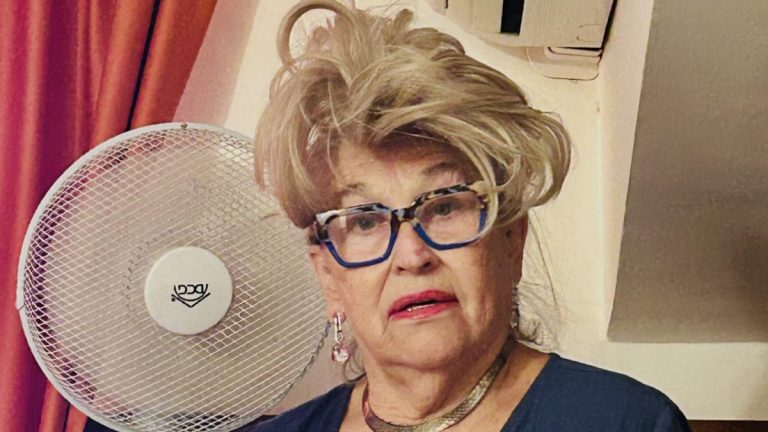
The rising temperatures and wildfires in Spain are having a major impact on the lives of British expats, bringing many to reconsider their choice of relocating to the “warm” Mediterranean. Barbara Collins, a 72-year-old former accountant from London, moved to Granada three years ago. But now the excessive heat is pushing her to end her lease early and look for a cooler city in Europe.
I’ve always dreamed of living in a Mediterranean country, but I never imagined that my craving for a year-round sunshine spot could one day turn into the biggest regret of my life.
When I decided to leave London three years ago – after retiring from my accountant job in the private health sector – like many Brits, I was hungry for a place where it would always be warm and seldom rained. Where I could just kill time out in the open, lazing on a plaza, enjoying my tapas with a glass of wine, even in winter.
Shorts
Caption: BRISTOL, ENGLAND – AUGUST 07: Hot air balloons take to the sky on the opening day of Bristol International Balloon Fiesta at Ashton Court Estate, on August 07, 2026 in Bristol, England. Europe’s largest annual hot-air balloon event, the Bristol International Balloon Fiesta, is a free to attend, three-day event running from Friday 7th to Sunday 9th August featuring scheduled twice-daily mass ascents of over 100 hot air balloons. (Photo by Finnbarr Webster/Getty Images) Photographer: Finnbarr Webster Provider: Getty Images Source: Getty Images Europe Copyright: 2026 Getty Images
news
Bristol Balloon Fiesta 2026 – the story in pictures
The hot air balloon bonanza has taken over the south-west city from Friday to Sunday, producing impressive images against the clear blue sky.
Bristol Balloon Fiesta est. 1979
The free event is held in the rolling hills of the Ashton Court Estate on the outskirts of Bristol.
Spectators flocked to the site on Friday to see the spectacular views with colourful balloons floating across the horizon.
Caption: A balloon pilot checks internal rigging as crews inflate a hot air balloon canopy before take off during the 48th Bristol International Balloon Fiesta, an annual free festival of hot air ballooning, which is the largest event of its kind in Europe. Picture date: Friday August 7, 2026. PA Photo. Photo credit should read: Ben Birchall/PA Wire Photographer: Ben Birchall Provider: Ben Birchall/PA Wire Source: PA Caption: BRISTOL, ENGLAND – AUGUST 07: A hot air balloon is prepared before take off on the opening day of Bristol International Balloon Fiesta at Ashton Court Estate, on August 07, 2026 in Bristol, England. Europe’s largest annual hot-air balloon event, the Bristol International Balloon Fiesta, is a free to attend, three-day event running from Friday 7th to Sunday 9th August featuring scheduled twice-daily mass ascents of over 100 hot air balloons. (Photo by Finnbarr Webster/Getty Images) Photographer: Finnbarr Webster Provider: Getty Images Source: Getty Images Europe Copyright: 2026 Getty Images
The mass ascent
Caption: Hot air balloons take to the air in a Mass Ascent at dawn during the Bristol international balloon fiesta, in Bristol, western England on August 7, 2026. (Photo by Henry NICHOLLS / AFP via Getty Images) Photographer: HENRY NICHOLLS Provider: AFP via Getty Images Source: AFP Copyright: AFP or licensors
Colourful tradition
The fun balloons come in all shapes and sizes, from vivid green aliens and rotund pandas to classic multicoloured stripes.
Caption: BRISTOL, ENGLAND – AUGUST 07: Hot air balloons land on a dried out field on the opening day of Bristol International Balloon Fiesta at Ashton Court Estate, on August 07, 2026 in Bristol, England. Europe’s largest annual hot-air balloon event, the Bristol International Balloon Fiesta, is a free to attend, three-day event running from Friday 7th to Sunday 9th August featuring scheduled twice-daily mass ascents of over 100 hot air balloons. (Photo by Finnbarr Webster/Getty Images) Photographer: Finnbarr Webster Provider: Getty Images Source: Getty Images Europe Copyright: 2026 Getty Images Caption: BRISTOL, ENGLAND – AUGUST 07: Hot air balloons are prepared on the opening day of Bristol International Balloon Fiesta at Ashton Court Estate, on August 07, 2026 in Bristol, England. Europe’s largest annual hot-air balloon event, the Bristol International Balloon Fiesta, is a free to attend, three-day event running from Friday 7th to Sunday 9th August featuring scheduled twice-daily mass ascents of over 100 hot air balloons. (Photo by Finnbarr Webster/Getty Images) Photographer: Finnbarr Webster Provider: Getty Images Source: Getty Images Europe Copyright: 2026 Getty Images
On Friday and Saturday evening, the festival will hold night glow events. Dozens of the balloons will rise into the air to hang like glowing lanterns above the city as it gets dark.
More of the best pictures
Caption: Hot air balloons are prepared ahead of a Mass Ascent at dawn during the Bristol international balloon fiesta, in Bristol, western England on August 7, 2026. (Photo by Henry NICHOLLS / AFP via Getty Images) Photographer: HENRY NICHOLLS Provider: AFP via Getty Images Source: AFP Copyright: AFP or licensors
Caption: A hot air balloon casts a shadow on the ground as the pilot prepares to land it, following a Mass Ascent, during the Bristol international balloon fiesta, in Bristol, western England on August 7, 2026. (Photo by Henry NICHOLLS / AFP via Getty Images) Photographer: HENRY NICHOLLS Provider: AFP via Getty Images Source: AFP Copyright: AFP or licensors Caption: Artist Emily Powell pictured in a hot air balloon basket, where she is painting live from inside a hot air balloon basket during the 48th Bristol International Balloon Fiesta, an annual free festival of hot air ballooning, which is the largest event of its kind in Europe. Picture date: Friday August 7, 2026. PA Photo. Photo credit should read: Ben Birchall/PA Wire Photographer: Ben Birchall Provider: Ben Birchall/PA Wire Source: PA
politics
What Burnham means for inflation, interest rates and living costs, according to experts
Energy prices have soared due to the US-Israel war with Iran (Photo: Getty)
Nearly three weeks into his job as Prime Minister, three economic experts assess what Burnham has done so far, and what it means for the economy and the pound in people’s pockets.
Thomas Pugh – chief economist at tax and consulting firm RSM UK
“Burnham doesn’t have the fiscal space to provide meaningful support for the cost of living in the short term without spooking the bond market.
“[Burnham’s] new policies probably cost around £1.5bn. That sounds significant, but it amounts to roughly 0.1 per cent of annual government spending – too small to alarm bond markets, but not enough to materially change the outlook for households.
“Burnham’s agenda rests on public control of essential services, mass housebuilding, regional devolution and re-industrialisation. Each could improve UK’s long-term growth potential if executed well.”
Exclusive
3 min read
Edward Jones, professor of economics at Bangor University
Caption: Britain’s Prime Minister Andy Burnham speaks to residents, care workers, volunteers and social care stakeholders during a care home visit in London, Wednesday, July 29, 2026. Kirsty Wigglesworth/Pool via REUTERS Photographer: Kirsty Wigglesworth Provider: via REUTERS Source: Pool
“Burnham’s economic measures, so far, have been modest.
“They should give disposable income a small lift but are not large enough to impact the UK’s growth rate materially.
Caption: Prime Minister Andy Burnham during a visit to Alstom Transport in Derby, to unveil a change to the education system with the launch of new technical educational routes. The new pathways will provide 14-year-olds with early access to technical skills, work experience and connections with local employers. Picture date: Tuesday July 28, 2026. PA Photo. Photo credit should read: Temilade Adelaja/PA Wire Photographer: Temilade Adelaja Provider: Temilade Adelaja/PA Wire Source: PA
Stocks continue to tumble, with the Dow Jones opening down over 500 points yesterday, as oil prices rise due to the war in Iran and the new Supreme Leader, Mojtaba Khamenei, stating that the Strait of Hormuz should remain closed. (Photo: Michael M. Santiago/Getty Images)
“The main test for Burnham is fiscal credibility…Markets have already shown that they are sensitive to suggestions of a looser fiscal stance.”
Chris Martin, professor of economics at the University of Bath
“There has not been much on the economic front. The plans for devolution sound sensible, but will only really pay off in the long run. The plans for social care seem brave, but again will only kick in over the longer term.
Andy Burnham speaking during a visit to a family centre in Sheffield, South Yorkshire, for the launch of the biggest transfer of power from Westminster in a generation, which will allow English mayors to keep a share of the taxes collected in their area, giving communities greater control over the decisions that shape jobs, transport, housing and public services. July 31, 2026. Annabel Lee-Ellis/Pool via REUTERS Photographer: Annabel Lee-Ellis Provider: via REUTERS Source: Pool Caption: New Pound coins. Introduced in 2017. Photographer: John Lamb Provider: Getty Images Source: The Image Bank RF Copyright: JOHN LAMB
“Having promised to not raise the main rates of tax, there is little room for manoeuvre. I had hoped for a striking statement of intent on e.g. the triple lock on pensions. But nothing so far.”
read the full story here
What Burnham means for inflation, interest rates and living costs
Callum Mason
Deputy Money Editor
Andy Burnham is now nearly three weeks into his job as Prime Minister, but what do economists make of what he’s done so far?
With inflation still above the 2 per cent target level and the Bank of England (BoE) keeping interest rates at the same level yet again last month, many will be wondering when they may start to see financial improvements to their lives.
Why Meta has been fined $567m over child safety
A US judge in New Mexico has ordered Meta to pay another $567m (£421m) for its failure to warn the public about dangers its platforms posed to children. This marks the largest fine against the company over child safety.
What you need to know
A New Mexico court imposed the penalty on Thursday.
The judge directed that the bulk of the money should go to treatment services for children and teens.
The case, which Meta lost in March, has already seen a jury levy $375m (£279m) in fines.
The second phase saw prosecutors ask the judge to require the tech firm to clamp down on child sexual exploitation.
LIFESTYLE
4 min read
What did the ruling say?
Judge Bryan Biedscheid was scathing in his assessment of Meta’s conduct and its impact on young people and society. Social media harms had become a “common, societal burden on and harm to the affected children and their families and schools”, he said.
Meta must pay an additional $567m (£421m) fine, of which $420m (£312m) will be used for treatment services for young people.
Actors including James McAvoy and Julianne Moore, as well as England cricketer Jonny Bairstow, have fallen for the hoax (Photo: Jeff Chiu/AP)
NEWS
3 min read
What will change as a result?
Judge Biedscheid also ordered Meta to make further changes to its platforms.
These include:
Facebook and Instagram must build banners and informational screens that clearly explain protection features and display them regularly to users.
It must also eliminate “like” counts for users under 18, ban push notifications for those users every day between 10pm and 7am each day and introduce a mandatory usage limit for under-18s of 90 cumulative hours per month.
No accounts belonging to users over 18 will be able to message underage users, and a “one strike” policy will be implemented for adults who engage in child sexual exploitation.
He also ordered a ban on sending and receiving nudity by underage accounts.
How has Meta responded?
We disagree with the ruling and will appeal. We work hard to keep people safe on our platforms and have been transparent about the challenges of identifying and removing bad actors and harmful content. We remain confident in our record of protecting teens online and will continue to defend ourselves against claims that misrepresent the facts.
Famous brands including Facebook and Instagram owner Meta have attempted to offset their carbon emission on the Kenyan project (Photo: CFOTO/Future Publishing via Getty Images)
Caption: A stock image of an old woman. // A longevity expert has urged women in their 30s to start “banking their bone” to avoid the painful effects of ageing and remain independent. Leslie Kenny, who co-founded a non-profit organisation called the Oxford Longevity Project designed to educate the public about ageing breakthroughs, has shared what she thinks is her most important piece of advice for women in their 30s: to create a “savings account for their skeleton”. “The biggest mistake I see is people thinking exercise is only about burning calories,” says Leslie, also the CEO of Oxford Healthspan. “In your 30s, you should be building muscle. Photo released 22/07/2026 Photographer: SWNS Provider: SWNS Source: SWNS
health
Seven simple ways to slow down ageing
While we might know to check our blood pressure or keep our weight in check, most people don’t think about their bone health until it is too late.
Poor bone health can lead to osteoporosis, which causes them to lose strength and break more easily, sometimes from as little as a cough, a sneeze or even a hug.
Why is bone health important?
Some 3.5 million people in the UK are estimated to have the condition, with half of women and 20 per cent of men over 50 breaking a bone because of it.
“Osteoporosis is one of the biggest threats to older people’s health and independence as our population ages,” says Craig Jones, chief executive of the Royal Osteoporosis Society.
Caption: Female nurse helping an elderly caucasian man to walk on a crutch in a nursing home. Medical professional assisting a senior male to get to the bathroom. Attendant providing therapy to an older adult Photographer: DMP Provider: Getty Images Source: iStockphoto
LIFESTYLE
5 min read
The seven simple ways
1Start younger than you think. Many of the foundations for our future bone health are laid much earlier than most people realise.
2Weight-bearing exercise is one of the simplest ways to maintain strength, mobility and bone health throughout life.
3Know which vitamins you need. Calcium and vitamin D work well together for bone health.
4Get enough sleep. Poor sleep can affect multiple areas of health, including physical resilience, energy levels, muscle recovery and overall well-being.
The seven simple ways
5Practise yoga. A study found that just 12 minutes of daily yoga significantly increased bone density in the spine and hips – the areas most vulnerable to osteoporosis.
6Cut down on alcohol and tobacco. Studies suggest that alcohol use can increase fracture risk by roughly 40-60 per cent and no level of tobacco smoking has been established as safe for bone health.
7Know your risk factors. Some, like ageing, genetics, menopause and family history are beyond our control. Some medications can increase the risk too.
How chemo straight after surgery could fight brain cancer
Blasting cancer cells with chemotherapy just minutes after surgery could improve results for brain cancer patients, according to new research from the University of Manchester.
Keenjee Nama, senior research nurse holds an injection of a BioNTech mRNA cancer immunotherapy for non-small cell lung cancer (NSCLC) – known as BNT116 – at the University College London Hospital clinical research facility in central London. Photo credit should read: Aaron Chown/PA Wire
What you need to know
Researchers found chemotherapy could be administered as soon as 15 minutes after surgery.
The second window is between 48 and 72 hours after surgery is done.
These are more effective because the blood-brain barrier is disrupted, allowing the drugs work better.
This could revolutionise glioblastoma treatment, as it could target microscopic cancer cells that can often grow back.
NEWS
2 min read
How significant is this?
Typically, patients have had to wait weeks to recover from surgery before they can receive chemo. But these early findings could present a better alternative to stop tumours returning.
Roughly 3,200 people are diagnosed with glioblastoma, an aggressive form of brain cancer, in the UK each year. Fewer than 5 per cent of patients live longer than five years after diagnosis.
Dr Thomas Kisby, who helped lead the study, said: “For the first time, we’ve shown that glioblastoma surgery briefly exposes a vulnerability we can exploit.”
Interview
5 min read
Caption: This is a photo of a woman clutching a pink piggy bank labelled pension. See PA Feature FINANCE Pension Pots. WARNING: This picture must only be used to accompany PA Feature FINANCE Pension Pots. PA Photo. Photo credit should read: Alamy/PA
NOTE TO EDITORS: This picture must only be used to accompany PA Feature FINANCE Pension Pots
Photographer: Alamy/PA Provider: Alamy/PA Source: PA
pensions
HMRC repays £50m to thousands of pension savers – how to see if you’ve overpaid tax
More than 12,500 pensioners had overpaid tax returned to them, amounting to an average payout of £4,000 per person.
What you need to know
In the three months between April and June, HMRC paid out £50.3m in tax rebates. These were for people who had been subject to an emergency tax code on flexible pension withdrawal.
This means their system assumes one withdrawal will be replicated each month for the next year and you are taxed accordingly.
But this is not the case for many pensioners, who may have made a one-off withdrawal. In this case, they were paid back the amount they had been overtaxed.
Money Clinic
2 min read
What to do if you think you have overpaid tax
If you have made a single pension withdrawal, you can check if you have overpaid tax on the HMRC website.
If so, you will need to fill out a claim form – either a P55, P53Z or P50Z.
If you only accessed part of your pension pot, you’ll want to fill out a P55.
People who withdrew their entire pension will fill out a P53Z or P50Z.
Explained
2 min read
Are you having as much sex as everyone else?
It’s natural for libido to wax and wane due to life events, dating status or hormonal changes.
And it can be hard to say what a “normal” sexual frequency is. But research and case studies give us a rough idea.
The statistics
When it happens
61%
A 2023 survey concluded that almost two thirds (61 per cent) of us wait until night-time to have sex.
Only 14 per cent opt to get busy in the early evening, and 10 per cent in the morning.
Three
Research from 2019 suggests that the average number of times British live-in or married couples have sex per month is three.
Are Gen Z having less sex than older people?
I see my partner on the weekends and have sex with others in the week.
Leanne, a 27-year-old influencer from Bristol has sex three or four times a week, but only sees her long-distance partner on the weekends. They have agreed they can both sleep with other people during the week.
Millennials
35-year-old Rebecca usually sleeps with her partner once or twice per week due to not having much child-free time.
Clare, 32, says her job is busy and she has to schedule sex with her partner on weekends, or some afternoons twice a month. “Occasionally this slips and I do worry that it makes us not as connected,” she says.
Gen X
Daisy, 56
I haven’t had the issue of my sex life drying up with menopause. I’m more aroused now.
Anna, 52
I’ve been married for 15 years. I love my husband, but our sex life is non-existent, and has been for about five years.
Mimi, 46
I’m not really motivated to seek out partners; I vaguely like the idea of it but not enough to take any action.
Boomers
I’ve been married for 20 years and sex has become something of a rarity. We maybe have sex once a week on a Sunday morning as we’re both relaxed and I can take Viagra late on Saturday night – without it, I can’t perform.
JACK, 63, OFFICE WORKER, KENT
Couple, talk and arguing with fight at house for disagreement, conflict and divorce discussion. Woman, explain and bored man for conversation, toxic relationship and drama and marriage fail in lounge – stock photo. (Photo: Getty)
The seven rules that could save your marriage
Keep your sense of self
I did what I thought I was supposed to do and forgot my needs and wants. I think it’s really important that you’re an individual and not just a person who is married.
KATIE STRATFORD*, A 55-YEAR-OLD MUM OF TWO, WHO DIVORCED ATER 19 YEARS
Caption: A married couple sitting in silence, looking in opposite directions. The image captures the concept of female loneliness within a marriage, emotional disconnection, and relationship problems. Symbolizes quiet desperation and isolation at home Photographer: Galina Zhigalova Provider: Getty Images Source: Moment RF
Seven rules to save your marriage
(Photo: Kathrin Ziegler/Getty).
The small things
Small things, like being brought a cup of tea or saying thank you, make a big difference.
Therapists
Karen Deulofeu, who ended her six-year marriage, believes all couples should seek support, even before they think they need it.
Female psychiatrist discussing with mid adult woman during therapy session – stock photo. (Photo: Getty)
(Photo: MTStock Studio/Getty).
Listen
Listen properly by repeating what you have heard and ask if you’ve got that right.
Don’t lose communication
People don’t talk about the deep issues; nobody else is going to do it for you. You don’t want to ask questions because it might rock the boat…you have to keep talking, and talk about what it is that you want within the relationship to keep going forward.
KATIE STRATFORD
‘One question is how to achieve such a longevity hack when most of us have relationships that unsettle us,’ says Dr Amir Levine (Photo: Oliver Rossi/Getty)
Seven rules to save your marriage
Remember that things change
“What you see on social media and what friends say is quite often the nice version. Everything is a phase,” says Deulofeu.
‘I’m genuinely considering returning to full-time work’ (Photo: PeopleImages/ Getty Images)Caption: A senior couple spend time in an indoor sunny market. The woman looks through a clothes on a rail as her husband waits patiently behind her. Photographer: Catherine Falls Commercial Provider: Getty Images Source: Moment RF
Look at yourself first
“Focus on what’s in your control and what you can do differently, rather than the other person or a situation that you can’t control. Invest in understanding yourself,” she adds.
I think that’s what often blinds us Brits. We crave sunshine so much and, like most people, I admit climate change never really topped my concerns. But this summer’s fires are frightening. What if Granada is next? What if my home burns down in flames?
I picked Granada because I fell in love with its rich cultural heritage, architectural wonders and the laid-back atmosphere of Andalucía, in southern Spain. I first visited the area with my late husband some 15 years ago, and that mix of Arabic heritage and Andalusian charmed me. The city’s layers of history and old traditions are fascinating.
The Alhambra palace is the gem. I would dream about it back in London. When I moved here, for the first four months I spent my days walking up to the palace, visiting each room and every corner of the garden, taking in the rich, lavish decor, admiring the flowers, pools and fountains, and just sitting in the shade. It felt like stepping into a fairy-tale.
I still go over to the palace regularly, twice a week, to read a book. But I haven’t been there in the last month due to the heat. I feel trapped inside my own house, and I avoid the sun like a vampire. If only I’d known the acceleration in climate change would have led to such enormous heatwaves, I would considered my move abroad more carefully.
Three years ago, summers were hot, but not as hot as this. Today, it’s 40 degrees in the shade, and I am forever indebted to whoever invented air-con.
During the day, I never leave my home. My Spanish cleaning lady brings me food supplies, water and groceries in the evening. Or I order takeaway tapas from the restaurant down my street. It’s too hot to cook. I’m stuck in my house all day long with the air-con at full blast, and even that’s not cool enough for me – I have also installed mini-fans across my house to better propel the cold air across rooms.
I also keep my curtains always drawn to avoid that sunshine gets in. Three weeks ago, I had them changed from transparent white to dark, thick orange blackout curtains. If someone saw me at home they’d think I’m crazy. I spend hours sitting or standing between the fans and the air-con units, finally relaxing.
A parasol provides protection from the sun in sight of the Alhambra in Granada – a favourite destination for Barbara (Photo: Alex Camara/Anadolu)
Now that even some parts of the Granada province, and of Andalucía, are being ravaged by fires, the danger feels all too real. At night I can’t sleep, horrible images I’ve seen on the TV of flames and burnt houses rush through my mind.
Luckily for me, I never gave in to the impulse of buying a property here in Granada, despite the reasonable prices compared to more touristy Spanish spots. I currently rent a three-bedroom apartment close to the ancient Alhambra district, walking distance from the gorgeous palace, for €800 per month. The lease is renewable each year and I have come to the conclusion that, sadly, I will likely terminate it at the end of this year, and start looking for other options elsewhere in Europe. Some place warm but not too hot.
Going back to the UK is not an option. I have no family. My husband died six years ago, as have most of my closest friends. I don’t own a home there any more so would need to buy or rent one, both of which would cost me a fortune. I am currently living on my UK state pension, and my late husband’s savings, very comfortably here in Granada. I spend €40 a week for groceries – back in London, it was around £80 for fresh produce. London is way more expensive, and I’d have to find a more convenient area.
I may hate the Spanish heat but I cannot go back to Britain where winters are cloudy, wet and dull. I hear reports of heatwaves and fires in Britain as well – without air-con – so it sounds like a nightmare in summer, too.
I have friends in Portugal, they say summers there are very pleasant and bearably hot, with a constant fresh sea breeze along the Atlantic coast. The ocean makes the country cooler compared to the Mediterranean region. I am planning a trip to Lisbon in November to start looking for houses to rent.
I regret moving to Granada, due to the heat, but I will always treasure this city. It is just so stunning, and I know I will miss it. The views, the rich architecture, the Spanish movida – its unique social life -and mood really got into my blood.
I used to eat out almost every evening, as I don’t like to cook, and there’s no need given the delicious Spanish food to be had at restuarants and bars. But the heat has taken that pleasure away from me, too. I have made some great friends among the expat community, but this summer, I’ve only met them only twice due to the temperature. I’m so glad I never bought a house here.
British pensioners living legally in Spain are benefiting from an automatic 4.8% increase to their UK State Pension for the current 2026/27 tax year. Because
Swapping the rainy weather of the UK for Spanish sunshine doesn’t mean waving goodbye to home comforts. Thousands of expats across the Costas have discovered
How you access healthcare depends on whether you need emergency care, routine medical attention, a public healthcare facility, or a private clinic. Many travellers will