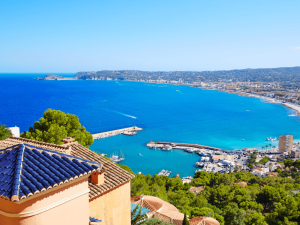
Moving to Costa Blanca: A Complete Guide for Expats
Published on listingsgallery.com · Expat Living in Spain · Updated 2026
| ⭐ Key Takeaways Moving to Costa Blanca gives you 300+ sunny days a year and a genuinely affordable lifestyle. You need an NIE number before you can rent, buy property, or open a bank account in Spain.EU and non-EU citizens both have clear legal pathways — but paperwork takes time, so start early. Healthcare in Spain is excellent, with both public and affordable private options available to expats. The cost of living is significantly lower than northern Europe, the UK, or North America. Trusted resources like listingsgallery.com help expats find properties and navigate the local market with confidence. |
Moving to Costa Blanca is one of the smartest lifestyle decisions you will ever make. This sun-drenched strip of Spain’s southeastern Mediterranean coast offers everything a modern expat could want. Think warm winters, crystal-clear water, fresh food, and a laid-back pace of life that northern Europe simply cannot match. Whether you’re retiring, working remotely, or starting fresh, Costa Blanca ticks nearly every box. And the best part? It’s far more affordable than most people expect.
The Costa Blanca region stretches along the Alicante province of the Valencian Community. It covers roughly 200 kilometres of coastline dotted with charming towns, busy resorts, and quiet villages. Alicante, Torrevieja, Javea, Denia, Altea, and Benidorm are among the most popular destinations for expats. Each has its own distinct character, atmosphere, and community vibe. Choosing the right town matters almost as much as choosing the country itself.
So whether you’ve been dreaming about this move for years or you’ve only just started researching, this guide has everything you need. We’ll cover visa rules, costs, healthcare, housing, and day-to-day practicalities in plain, honest language. We’ll also point you toward brilliant resources like listingsgallery.com, where you can browse real property listings across the region as you start planning your move in earnest.
Why So Many Expats Are Choosing Costa Blanca
Let’s start with the obvious: the weather. Costa Blanca enjoys more than 300 days of sunshine per year. Winters are mild and genuinely pleasant. Summers are hot but breezy along the coast. For anyone escaping relentless grey skies, this alone is a life-changing upgrade. Add in the fact that you can sit at a seafront café in January with a glass of local wine, and you start to understand the appeal.
Beyond the sunshine, the lifestyle itself is the real draw. Spain operates at a different speed. Meals are long and social, afternoons are leisurely, and evening walks along the promenade are a genuine daily ritual. The food culture is extraordinary — fresh seafood, paella, tapas, and incredible local produce at prices that seem almost too good to be true. Moving to Costa Blanca means trading stress and grey skies for something much, much better.
Furthermore, the infrastructure for expats here is genuinely excellent. English-speaking lawyers, doctors, dentists, and estate agents are easy to find throughout the region. There are well-established expat communities offering social events, local advice, and genuine friendship. Property search platforms like listingsgallery.com make finding your dream home intuitive and transparent. You won’t feel like you’re navigating a foreign system alone when you use the right tools from the start.
📊 Costa Blanca at a Glance — Essential Facts
| Category | Key Information |
| Location | Province of Alicante, Valencian Community, southeastern Spain |
| Coastline | Approximately 200 km of Mediterranean coastline |
| Annual Sunshine | Over 300 days per year |
| Average Winter Temperature | 15–18°C (59–64°F) |
| Average Summer Temperature | 28–33°C (82–91°F) |
| Main Expat Towns | Alicante, Torrevieja, Javea, Denia, Altea, Benidorm |
| Currency | Euro (€) |
| Official Languages | Spanish (Castilian) and Valencian |
| Nearest International Airport | Alicante-Elche Miguel Hernández Airport (ALC) |
| Time Zone | CET (UTC+1) / CEST (UTC+2) in summer |
| Population | Approx. 1.9 million (Alicante province) |
| Internet Speed (avg.) | Among the fastest in Europe — fibre widely available |
Understanding Visas and Legal Requirements
Getting your legal status sorted is the very first priority when moving to Costa Blanca. The rules differ depending on your passport. EU citizens can relocate freely without a visa, but they still need to register on the Padrón (local census register) within three months. They should also obtain a Certificate of EU Citizen Registration from the local foreigners office. These steps are often skipped and later cause real headaches.
Non-EU citizens have several options depending on their situation. The Non-Lucrative Visa is the most popular route for retirees and those with passive income. It requires proof of sufficient funds and private health insurance. Spain’s Digital Nomad Visa is a newer option that lets you work remotely for non-Spanish clients or employers while living legally in the country. Both visas require a fair amount of documentation, so give yourself at least three to four months to prepare applications.
Regardless of nationality, every expat needs an NIE (Número de Identificación de Extranjero). This is your Spanish identification number, and you simply cannot function without it. You need it to open a bank account, sign a rental agreement, buy property, and pay taxes. Apply at the Spanish consulate in your home country before you leave. Many expats use a local gestor — an administrative professional — to handle the process efficiently once on the ground.
| 📋 Important: Your NIE is Non-Negotiable You cannot rent, buy, bank, or work legally without it. Apply at your nearest Spanish consulate BEFORE you arrive — it speeds everything up. Always carry a certified copy, not just the original. A local gestor can handle the application for you for a modest fee. |
Picking the Right Town for Your Lifestyle
Choosing where to live within Costa Blanca is almost as important as choosing Spain itself. Each town has a different personality, a different expat mix, and different price points. Spending time in a few areas before committing is always the wisest move. That said, understanding what each major hub offers gives you a great starting point for your research and shortlisting.
Listingsgallery.com is a genuinely useful tool here — you can search properties town by town, compare prices across areas, and get a real sense of what your budget buys in each location. Looking at actual listings helps you visualise your future life far more concretely than reading descriptions alone. It also reveals which areas offer the best value for your specific budget, which varies quite significantly across the region.
🗺️ Top Expat Towns — Ranked by Lifestyle Match
- Javea (Xabia) — For nature lovers, outdoor enthusiasts, and those wanting upscale quiet. Stunning rocky coves, a charming old town, and a well-connected international community. Property prices are higher but the quality of life is exceptional.
- Denia — Ideal for families and those seeking authentic Spanish culture alongside expat convenience. Excellent state and international schools. Ferry connections to the Balearic Islands are a bonus for weekend escapes.
- Torrevieja — The budget-conscious expat’s top pick. The largest expat population in the region, famous pink salt lakes, and some of the lowest property prices on the coast. Great for retirees on a fixed income.
- Altea — Perfect for creatives, artists, and those wanting genuine charm over resort buzz. A beautiful whitewashed old town on a hill, excellent restaurants, and a quieter, more reflective pace of life.
- Alicante City — Best for urban energy with beach access. Superb transport links, a lively restaurant scene, the iconic Santa Bárbara castle, and a real mix of Spanish and international life in equal measure.
- Benidorm — Great for sociable expats who love entertainment, lively bars, and a year-round resort atmosphere. More affordable than people expect, with a surprisingly strong sense of community among long-term residents.
The Real Cost of Living Here
One of the most exciting things about moving to Costa Blanca is discovering how far your money actually goes. Compared to most of northern Europe, Scandinavia, or North America, day-to-day costs are dramatically lower. Fresh produce at local markets costs a fraction of what you’d pay at a supermarket back home. Eating out is genuinely affordable — a proper three-course lunch menu del día runs around €10–12, wine included.
Utility bills are manageable too, though summer air conditioning costs can add up during the hottest months. Petrol is cheaper than the UK and most northern European countries. Public transport is reliable and inexpensive. A comfortable, well-furnished two-bedroom apartment in a good location costs far less to rent than its equivalent in London, Amsterdam, or Dublin. Your money simply goes further here than in most comparable places.
💶 Monthly Living Cost Estimates for Costa Blanca Expats
| Expense | Budget Lifestyle | Comfortable Lifestyle | Premium Lifestyle |
| Rent — 1-bed apartment | €480–€650 | €700–€1,050 | €1,200+ |
| Rent — 2-bed apartment | €650–€850 | €900–€1,300 | €1,500+ |
| Groceries (local shops) | €130–€180 | €220–€320 | €380+ |
| Dining Out | €90–€130 | €180–€280 | €400+ |
| Utilities (electric, gas, water) | €60–€90 | €90–€140 | €160+ |
| Private Health Insurance | €50–€80 | €85–€160 | €180+ |
| Transport (car or bus) | €30–€60 | €80–€160 | €220+ |
| Leisure & Entertainment | €50–€90 | €140–€260 | €450+ |
| Estimated Monthly Total | €890–€1,280 | €1,495–€2,270 | €3,000+ |
Healthcare: What Expats Need to Know
Spain’s healthcare system is widely recognised as one of the best in the world. It consistently ranks in the top ten globally for quality, accessibility, and outcomes. Moving to Costa Blanca means you’re entering a country that takes healthcare seriously, with modern hospitals, well-trained doctors, and clean, efficient facilities throughout the region. The main Alicante hospital and various smaller clinics serve the expat community very effectively.
EU citizens who receive a state pension or are employed can often access the Spanish public system via an S1 form. Non-EU expats on a Non-Lucrative or other residency visa must hold private health insurance as a legal requirement. The good news is that private health insurance in Spain is genuinely affordable and comprehensive. Expect to pay roughly €50–€180 per month depending on your age and the level of cover you choose.
Additionally, English-speaking GPs, dentists, specialists, and physiotherapists are plentiful throughout the Costa Blanca region. In expat-heavy towns like Javea, Denia, and Torrevieja, finding a doctor you can communicate with easily is straightforward. Don’t wait until you’re sick to research this — identify your nearest health centre, private clinic, and hospital before you need them. This simple step removes enormous stress during your settling-in period.
| 💊 Healthcare Quick Tips for New Arrivals Register at your local health centre (centro de salud) as soon as you arrive. Get your European Health Insurance Card (EHIC) if you’re an EU citizen — it covers emergency care. Private health insurance is mandatory for most non-EU residency visas. Pharmacies (farmacias) in Spain are exceptionally well-stocked — pharmacists can advise on minor ailments. Most private clinics in expat areas have English-speaking staff as standard. |
Finding Your Home: Renting and Buying
The Costa Blanca property market offers outstanding value compared to most other European coastal regions. Whether you plan to rent first and buy later — which most advisors recommend — or go straight into purchasing, there are excellent options at every budget level. Moving to Costa Blanca is genuinely accessible from a property perspective, even for buyers with modest means. The quality of what you can get here is remarkable.
Starting with a rental makes enormous sense. It lets you experience different areas without commitment. You can discover whether you prefer the buzz of a coastal town or the peace of an inland village. Rental prices vary widely: a one-bed apartment in Torrevieja rents for as little as €500 per month, while a three-bed villa with a pool in Javea might run €1,500 or more. Spending three to six months renting before buying is the approach most seasoned expats recommend.
When you do decide to buy, listingsgallery.com is an excellent starting point. It aggregates properties across the region so you can compare locations, sizes, and price points in one place. Always hire an independent lawyer — not the agent’s recommended one — to protect your interests. Your lawyer should verify the property registry, check for outstanding debts, and ensure all planning permissions are in order. Budget 10–14% on top of the purchase price for taxes, notary fees, and legal costs.
| 🏡 Property Buying Checklist — Do This In Order 1. Get your NIE sorted first — you cannot complete a purchase without it. 2. Open a Spanish bank account for transferring funds. 3. Browse listingsgallery.com to understand the market in your target area. 4. Hire an independent Spanish lawyer who specialises in property conveyancing. 5. Commission an independent survey — especially for older properties. 6. Budget 10–14% on top of the purchase price for all buying costs. 7. Check community fees if buying an apartment in a complex. |
Banking, Taxes, and Your Money
Sorting out your finances is one of the first practical tasks after moving to Costa Blanca. You’ll need a Spanish bank account almost immediately — for paying rent, utilities, and setting up direct debits. Opening an account is straightforward. Bring your passport, NIE number, and proof of address. Most banks in expat areas have English-speaking staff, and the major banks — BBVA, CaixaBank, Santander, Sabadell — all have extensive branch networks.
Tax residency is a subject every expat must understand clearly. If you spend more than 183 days per year in Spain, Spanish tax law considers you a tax resident. This means you must declare your worldwide income to the Agencia Tributaria — Spain’s tax authority. The rules are clear but complex, especially if you have income, pensions, or investments in your home country. A qualified Spanish tax advisor (asesor fiscal) is worth every euro of their fee.
Moreover, if you hold foreign assets worth over €50,000 — bank accounts, investments, property — you must declare them using the Modelo 720 form. Penalties for non-compliance are significant. Spain’s Beckham Law is also worth investigating if you’re relocating for employment purposes. It allows qualifying expats to pay a flat 24% income tax rate for up to six years instead of progressive rates that reach 47%. This can mean substantial savings for higher earners.
Family Life, Schools, and Community
Moving to Costa Blanca with children is a wonderful decision, and the region is well set up for families. Spanish state schools are free and excellent at language immersion — most expat children become comfortably bilingual within twelve months. The Spanish curriculum is rigorous, and children typically integrate faster than their parents expect. Being thrown into a Spanish classroom feels daunting, but kids are astonishingly adaptable.
For families preferring English-medium education, the Costa Blanca has a good range of international schools. These follow British, American, or International Baccalaureate curricula. Fees vary depending on the school and year group, but most are competitive with international schools in other parts of Europe. Apply early — popular schools have waiting lists, especially in towns like Javea and Denia where expat family populations are highest.
Beyond schooling, family life here is rich and active. After-school sports clubs, swimming academies, music lessons, and martial arts classes are easy to find. Local fiestas are spectacular, colourful, and all-ages affairs that bring communities together genuinely. The sense of neighbourhood is strong. Getting involved in local life — even just attending the town fiesta — helps families settle in and build friendships far faster than staying in the expat bubble.
Your Step-by-Step Pre-Move Checklist
Planning is everything when you’re relocating internationally. The more you organise before you leave, the smoother your arrival will be. Moving to Costa Blanca involves a lot of moving parts, but breaking it down into ordered steps makes the whole process manageable. Work through this list in sequence and you’ll arrive feeling prepared, not overwhelmed, and ready to enjoy your exciting new chapter.
✅ Pre-Move Action Plan — Follow This Order
- Research your preferred Costa Blanca towns thoroughly. Visit at least two before committing to a location.
- Apply for your NIE at the Spanish consulate in your home country — allow three to four months minimum.
- Arrange private health insurance that meets Spanish visa requirements if applicable to your situation.
- Book short-term rental accommodation for your first two to three months on the ground.
- Browse property listings on listingsgallery.com to understand pricing and availability in your target area.
- Notify your home country tax authority of your planned move and seek cross-border tax advice.
- Open a Spanish bank account within the first two weeks of arrival — bring NIE, passport, and proof of address.
- Register on the Padrón at your local town hall within 90 days — this is legally required.
- Hire an independent Spanish lawyer if you plan to buy property — do this before you start viewing seriously.
- Connect with local expat communities online and in person. Platforms like listingsgallery.com often have community resources and local guides to get you started.
Moving to Costa Blanca is, without question, a leap of faith. But it’s also one of the most rewarding leaps you’ll ever take. The combination of climate, culture, affordability, safety, and community makes this stretch of the Spanish Mediterranean coast genuinely hard to beat. Do the homework, use trusted tools like listingsgallery.com, lean on those who have gone before you, and embrace the whole adventure with curiosity and an open heart. Your best chapter might just be starting.
Frequently Asked Questions
Q1: Do I need to speak Spanish before moving to Costa Blanca?
You don’t need to be fluent before you arrive — especially in towns with large expat populations like Torrevieja and Javea. Many services, doctors, and estate agents operate comfortably in English. That said, learning basic Spanish transforms your experience. Locals genuinely appreciate every effort you make. Start with a beginner course or an app like Duolingo a few months before your move, and keep learning once you’re there. You’ll be surprised how quickly it clicks when you’re immersed in daily life.
Q2: How much savings do I need before moving to Costa Blanca?
A good rule of thumb is to have at least €8,000–€12,000 in savings to cover your arrival costs comfortably. This covers deposits, the first few months of rent, administrative fees, furniture, and unexpected expenses. The Non-Lucrative Visa also requires proof of approximately €2,400 per month in income (plus extra for dependants). On top of that, an ongoing monthly budget of €1,500–€2,000 is comfortable for one person living a relaxed, enjoyable lifestyle.
Q3: Can non-EU citizens buy property in Costa Blanca?
Absolutely — Spain welcomes property buyers from all nationalities, and there are no restrictions on foreign ownership. You need an NIE number to complete any purchase. The process is well established and very manageable with the right professional support. Always hire an independent property lawyer, not the agent’s preferred one. Use listingsgallery.com to get a strong understanding of the market before committing to viewings. Budget 10–14% on top of the purchase price for all associated taxes and legal fees.
Q4: Is private health insurance expensive in Costa Blanca?
Not at all — it’s one of the most pleasant surprises for expats coming from countries like the UK, US, or Australia. Comprehensive private health insurance in Spain typically costs between €50 and €180 per month depending on your age and level of cover. Many expats actually prefer private healthcare over public services because waiting times are shorter, English-speaking doctors are easier to find, and the facilities are excellent. Shop around and compare policies before you commit to one provider.
Q5: Which Costa Blanca town is best for retirees on a budget?
Torrevieja is consistently the top recommendation for budget-conscious retirees. It has the largest expat population on the Costa Blanca, which means there are extensive English-language services, social clubs, and community groups. Property and rental prices are among the lowest in the region. The famous pink salt lakes nearby offer genuinely therapeutic benefits too. Orihuela Costa, just south of Torrevieja, is another excellent option with slightly more space and a slightly quieter feel.
Q6: How long does it take to feel settled after moving to Costa Blanca?
Most expats feel genuinely at home within six to twelve months. The first few months involve a lot of admin and adjustment — getting your NIE, bank account, health insurance, and accommodation sorted takes energy. By month three or four, daily routines start to feel natural. By month six, the majority of expats say they can’t imagine going back. Getting involved in local life — joining a sports club, attending fiestas, taking language classes — dramatically speeds up the settling-in process. Moving to Costa Blanca is a journey, and every step of it is worth it.
For property listings, local guides, and expat resources across the Costa Blanca region, visit listingsgallery.com — your trusted partner for finding the perfect home in Spain.